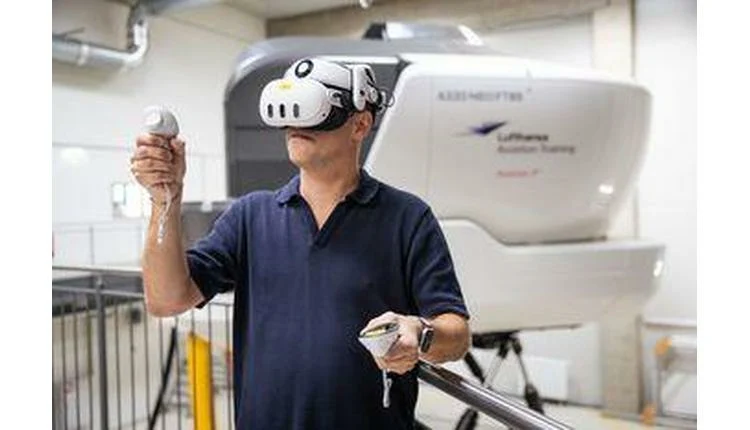
Austrian Airlines has successfully integrated Virtual Reality (VR) technology into its pilot training programme for the Airbus A320, marking a significant advancement in aviation training. The initiative, a collaboration with Airbus and Lufthansa Aviation Training (LAT), began in late 2022 and is set to be fully integrated by the end of 2025. The VR headsets, which simulate various flight scenarios, offer pilots an immersive learning experience, complementing traditional training methods.
The training process involves pilots completing a week-long self-study lesson (SSL) before engaging in three 180-minute VR sessions. This approach bridges the gap between theoretical knowledge and practical application, enhancing the overall training experience. Michael Kircher, Head of Training at Austrian Airlines, highlighted the potential of VR technology, stating, "With the latest generation of VR headsets, we now have a powerful tool that provides our colleagues with an ideal complement to their training and learning path for a career on the Airbus A320."
The project has undergone extensive testing and development, with input from a core team of experts and a test group of 20 pilots. Christoph Kraus, Head of Theoretical Training and VR Team Leader at Austrian Airlines, expressed excitement about the future possibilities, noting that the integration of VR technology has opened new avenues both technically and from a regulatory standpoint.
Pia Born, Project Manager at LAT, emphasised the success of the VR integration, stating that it has already provided tangible benefits. The focus now shifts to expanding the programme to include additional aircraft types and enhancing crew satisfaction. The initiative underscores Austrian Airlines' commitment to innovation and its role within the Lufthansa Group, Europe's largest airline consortium
This story was selected and published by a human editor, with content adapted from original press material using AI tools. Spot an error? Report it here.